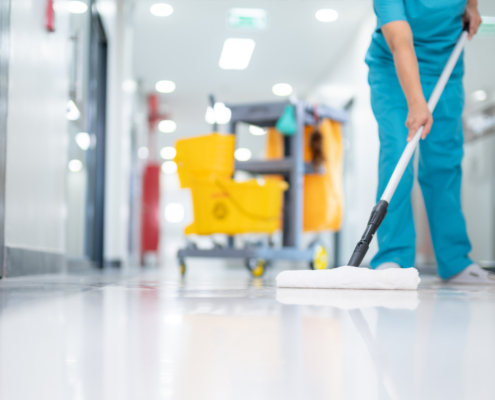
A general janitorial crew can keep an office building looking sharp. They’ll clean restrooms, mop floors, and sanitize break rooms. But in a medical environment, that level of service creates real risk.
Here’s where the gaps typically show up:
Surface-level vs. pathogen-level cleaning. Standard cleaning removes visible soil and reduces surface bacteria in a general sense. It doesn’t account for high-risk pathogens like MRSA, C. diff, or norovirus, which require specific hospital-grade disinfectants and precise application techniques to eliminate effectively.
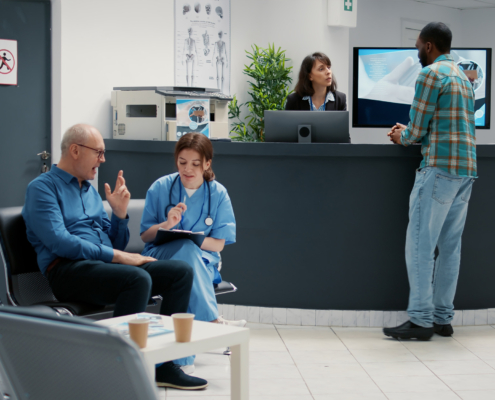
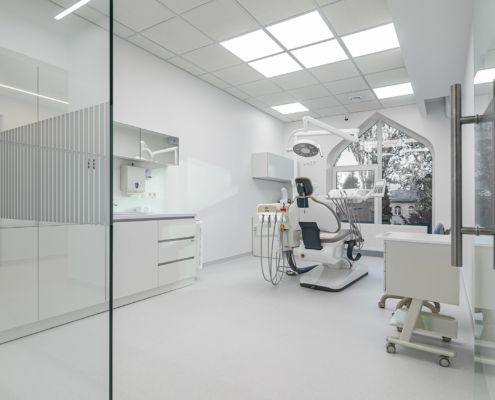
No zone or risk stratification. A standard cleaning crew treats a waiting room the same way they’d treat a conference room. In healthcare settings, different areas carry different contamination risks. Exam rooms, restrooms, procedure areas, and waiting rooms all require different protocols, dwell times, and product strengths.
No training for bloodborne pathogen exposure. OSHA’s Bloodborne Pathogens Standard requires that cleaning staff in healthcare environments receive specific training on handling potentially infectious materials. Most general commercial cleaners don’t have this.
This is exactly where deep cleaning services that go beyond the surface become critical in medical environments. Thoroughness isn’t a bonus—it’s a baseline requirement.